Blog

Communitas Psychotherapy

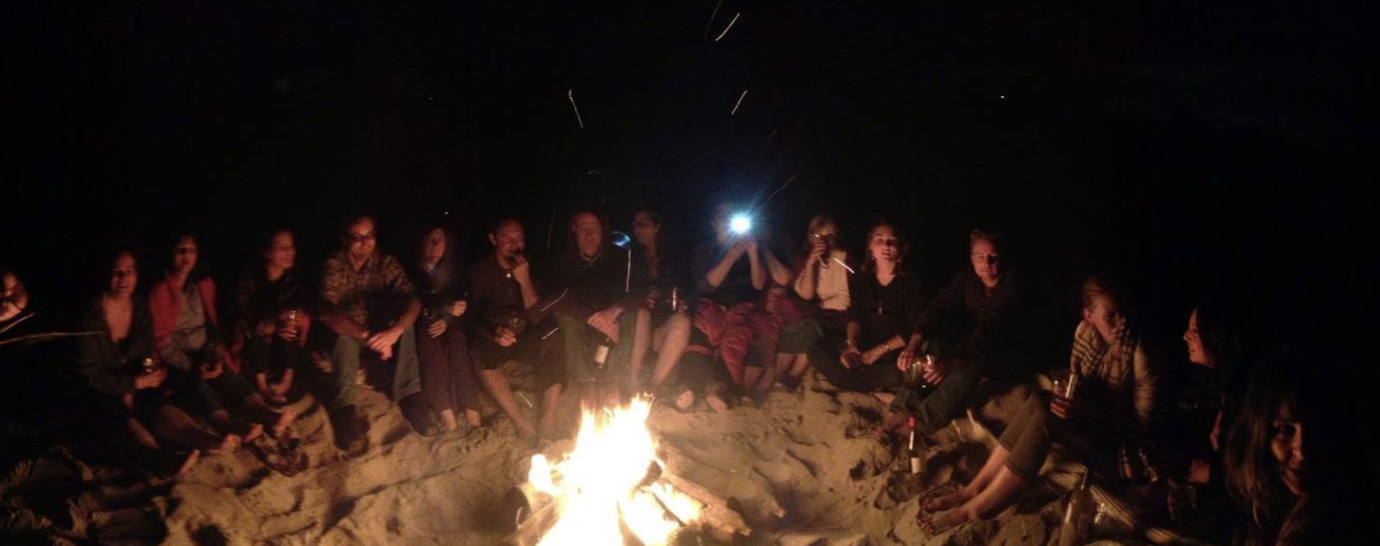
A group of people gathered around a beach bonfire at night

The practice of psychotherapy is in peril; patients and their practitioners are overwhelmed, while the need for quality and effective treatment has never been greater. Psychotherapy’s transformative power and influence rest upon the therapeutic relationship and the container of the therapeutic process. The profound sense of contact, containment, and mirroring provided by the original models of psychotherapy has been diluted by contemporary society’s demands and distractions. Additionally, the current dilemma has made traditional practices unfeasible for most. Communitas Psychotherapy proposes recovering this ancient practice for contemporary psychotherapy in order for it to meet the demands of modern life by supporting the psychotherapeutic endeavor. The move toward a broader frame for psychotherapy (i.e., Group Psychotherapy) isn’t entirely new, but its deeper implications warrant further exploration.

Communitas facilitated the transformation of the individual in deep coordination and participation with the whole.

Communitas is a Latin word translating roughly to “community” or “the spirit of community.” It is perhaps best known from the work of cultural anthropologist Victor Turner, who explored its critical meaning as the shared, unstructured state of liminality and transformative experience in rituals—particularly rites of passage. An ancient idea, Communitas was essential to community and an individual’s sense of self. It was a practice that created the conditions for a cohesive, functional, and generative identity to emerge, as opposed to a dissociated, collapsing, and ultimately destructive one. Turner explored Communitas as an essential aspect of cultural evolution. Often, these rites of passage served the pragmatic purpose of formal maturation from one state of selfhood to another. Most importantly, Communitas facilitated the transformation of the individual in deep coordination and participation with the whole. It was a practice, an idea, and a visionary expression of an old economy—one in deep participation with reality through connection to “otherness,” whether in humans, nature, or the more-than-human aspects of existence.

Our modern idea of capital was a profound departure from the old economy, which was circular and predicated on the primacy of reciprocal relationships with each other, Nature, and the unknown. Author Lewis Hyde explored this subject extensively in his 1979 work, The Gift: Imagination and the Erotic Life of Property. Contrasting the old circular exchanges of economies, ideas, art, and even the creative process, he elucidated how the Gift exchange was decidedly moved out of the circle and into the realm of personal ownership—capital. The Gift was the essential spark of the new that humans can only participate in and receive. This is fundamental when considering the change, cure, or transformation that is sought in psychotherapy. Communitas is of the old economy and relied entirely on the interdependence of the individual and the other. There was a shared responsibility that extended deep into the very core of the sense of self. This dependency was central and oriented the community around a primal economy of exchange that was circular in structure. Capital, understood as ownership and a setting aside something for oneself, can afford a certain amount of refinement on freedom and individual pursuit, but it cannot be the foundation of a coherent sense of self. We attempt to have it for ourselves and remove it from the circle of the greater economy, but in doing so we decrease our capacity for a substantial, abiding identity that infuses life with meaning and joy.

We take the gift and keep it for ourselves in the form of profit—and in doing so we decrease our capacity for a substantial, abiding identity that infuses life with meaning and joy

Communitas addressed a particularly pernicious modern problem of identity. Our identities are very closely connected to our problematic and stuck behavior—our symptoms. The assumption was that in order for one’s sense of self to be substantive, enduring, and deep, it must be connected to the whole, including an experience of otherness and unknowableness. This otherness and unknowableness was not only the physical community but Nature and mystery. Attachment theory continues to reveal that we cannot actually become human or know ourselves except through interaction with others. Communitas included the other both within and without us. It operated on the understanding that distinction requires interdependence with each other and the mysteries of imagination and Nature. Modernity has abstracted and dissociated from this reality; we frequently construct fantasies about who we are and what we are even capable of. This has almost certainly contributed to the explosion of identity crises. A self is not something one has, but something one becomes. However, there is so little soil for its growth today. Reciprocal relationship has been exchanged for ownership. Whenever the gifts of life–whether tangible assets, ideas, practices, services, and even a sense of self are not honored as having origins in the mystery of creation and participation with others, they become capital, and the sacred is reduced to the profane. Communitas recognized and honored that identity has its roots in the otherness of other humans and the otherness of the more-than-human world.

Building upon the fundamental container of the therapeutic relational dyad, a psychotherapy that practices with Communitas cultivates a more appropriate, present-day container capable of holding experiences so that the new can emerge and our capacity to heal, mature, and know significant psychological change can expand. A Communitas Psychotherapy is less a radical new idea and more an imaginative arrangement of well-known notes. It facilitates an emergent, deeply rooted identity capable of maturation and transformation by expanding the traditional dyadic container of the therapeutic experience. Recruiting the containing presence of others increases our capacity to contain our own otherness. As we are held, so we hold, both others and ourselves. A massive contributor to the current mental health crisis is that we continue to labor under the delusion that our identity is the sole result of our own willful assertion. We rush in to fill the void of unconsciousness or the unknown with the well-trodden paths of the ego perspective and only contaminate or prevent the process of change. Communitas Psychotherapy brings appropriate resources to hold the paradoxes and the opposites within ourselves without demanding an immediate understanding. It is a containing, not a meddling. With the ego at bay and others containing us, we are given an experiential model for holding ourselves so the new can emerge from our own inner mystery. With this realization and practice, an immense burden is potentially lifted; a critical conundrum of the modern trap is slipped.

As we are held, so we hold, both others and ourselves.

Re-imagining psychotherapy within the ancient practice of Communitas recovers a dimension of therapeutic power largely absent in the clinical model of psychotherapy. Anthropological research reminds us how ancients and primal peoples participated in the old economy, recognizing the sacred, communal, and liminal space required for transformation and the appropriate maturation needed to cohere and function in society. They instinctively knew we are a co-creation, the result of a dialogical relationship between self and the unknown—the unknown of others, ourselves, and the world. Without this, humanity risks losing individual and communal coherence and meaning. When the otherness of experience is given appropriate participation in the therapeutic process, its transformative power is reclaimed at a time when it is most needed.

Groundwork

p0005Genius as Gift. In the 1979 classic, The Gift: Imagination and the Erotic Life of Property, author Lewis Hyde recognizes the ancient idea that one’s genius is a gift and only in relating  to it in this way is it possible to access it. In contrast to a gift, Hyde describes the contemporary practice of treating genius as a commodity. As a commodity solely attributed to the will, one’s genius loses its potential to animate and sustain life. Genius becomes property. Hyde comments on the current cult of genius. “The public adoration of genius turns men and women into celebrities and cuts off all commerce with the guardian spirits.” Instead of service and gratitude, indicative responses to a gift, one’s genius is traded on for personal gain.  It is important to consider that both commodities and gifts are essential parts of society, however, gifts are of the old economy and have to do with soul. 

Observed in everyday life, the difference between these two approaches to genius may appear subtle, but they render vastly different results. Hyde observes that genius as commodity becomes a parasitic narcissism–a current cultural phenomenon. Genius engaged as gift results in unique, sustainable, soulful living. When one sacrifices or is in service to their inherent genius they become more like the gift–genius– instead of altering it to match their ego–preconceived identity. And, in the final stage of transformation the gift is passed on to others, keeping it potent and in motion.

Work and Labor.  Hyde suggests that one’s genius comes into the world not through work, but through labor. These can be difficult terms to untangle. Hyde imagines work as intentional, within the control of the self. In contrast to work, he posits, “A labor can be intended but only to the extent of doing the groundwork, or of not doing things that would clearly prevent the labor. Beyond that labor has its own schedule.” When laboring one has the sense that they were present but somehow the work was not entirely of their doing. Something was at work within them. Perhaps another way of saying this is that labor asks that one be in relationship to the inner world. Labor becomes the essential creative act, an intersection of what one can control and cannot.  It is a bit of a dream state, a dialogue or conversation and an acknowledgement and naming of the gift.

Regardless, recognizing this slight, subatomic variation in perception holds potential for a magnificent chain reaction.  No longer does work carry the burden of sustaining one’s sense of self. As the poet Mary Oliver penned it:

You do not have to walk on your knees
For a hundred miles through the desert, repenting.
You only have to let the soft animal of your body
love what it loves.

Self worth is no longer founded on work or performance, but on a willingness to be in relationship. Work–an essential task–can become very simple and nourishing, perhaps sacramental.  Its seems that contemporary culture is experiencing a crisis regarding their relationship to work. Perhaps we have been expecting something from work that it simply cannot produce. Conceiving genius as gift and the offspring of labor and not work re-appropriates the ego or self, putting it in service of or in relationship to mystery. The current conventional practice of genius seen as commodity–the product solely of our efforts, produces an experience of work that is ever diminishing, fearful, often resulting in disaster.

 Welcomed Relief. I don’t have to make it happen–genius. It’s already there. I don’t have to perform. I only have the opportunity to witness and experience gratitude. And, in this form of service I am grounded to daily life while also coming into contact with something beyond me. In the original sense of the word religion, I become linked to the spiritual dimension, through an everyday practice. I have long carried the cultural burden that I must constantly produce genius through my work.  I experience a sigh of relief and a kind of homecoming while revelling in the idea of labor.  No longer must I toil in biblical agony, feeling diminished at every turn. As author, psychologist Donald Kalsched put it, one trades purgatorial agony for genuine suffering. It is a shedding of  old ideas and a surrendering to new possibilities.  My guess is that this is the real work, the appropriate work, the groundwork of genius.

Felix Felicis

Screen Shot 2015-08-23 at 9.37.25 AM

Felix Felicis is the title of a chapter in JK Rowling’s Harry Potter and the Half Blood Prince. It is also featured in the film adaptation. Although, a relatively small vignette in the story it is one that I find addresses a  most essential and perplexing human experience. The phrase is another that Rowling has created from latin, translating loosely to, happy luck. Through this vignette she elucidates a paradoxical and enriching experience of luck.

Felix Felicis is a coveted potion within the wizarding world that grants its user a perfect day, ensuring luck in all of one’s endeavors. Harry is awarded a small vile of the potion for successfully brewing the best Draught of Living Death. Harry accomplished this by stumbling onto the slightly altered instructions noted in the margins of Severus Snape’s old textbook. Harry retains his reward for some time, passing on several tempting opportunities to use it. Finally, Harry uses the potion in an attempt to gain a memory from an evasive and resistant professor, Horace Slughorn. This is an ordeal that Harry had hopelessly failed at before and that Dumbledore had previously assigned as imperative for defeating Voldemort.

Drinking the potion, Harry abandons any rational plans for obtaining Slughorn’s memory. Following a brief trance-like pause, Harry confidently states, “I’m going down to Hagrid’s”. Potter strolls confidently onto the school grounds and beyond the safety of Hogwarts’ protective walls. Just before crossing into a precarious nightfall he passes the busy Professor Slughorn who is taken aback by Harry’s attitude. Intrigued, Slughorn insists on accompanying Harry.  Ensuing meanderings lead Harry and Horace into an intimate gathering at Hagrid’s cottage. Following revelry and significant amount of Butterbeer, Harry finds himself across the table from an intoxicated and strangely unguarded Slughorn.  It is here that Horace voluntarily offers up his most protected secret, a memory of a conversation with Tom Riddle–the young Voldemort–where he discusses the dark magic of the Horcrux–the pivotal piece for unraveling Voldemort’s diabolical plan.

Deep in the perilous adventure and at a most critical juncture in the story luck became necessary.  I sensed an ineffable familiarity with what was unfolding in Felix Felicious.  Harry was capable of accomplishing this heroic task only by relinquishing control.  Felix enabled a surrendering of the will, a position that was open to participation. It seemed something like succumbing  to the sound of a moving musical score or the composition and color of an evocative painting. There is an invitation to participate with what is happening. Demands for control fade into the background. Under the influence of Felix it seemed that Harry’s focus diffused, became peripheral. Instead of willing an event into existence he made contact with the present and the particulars of what was happening in the moment. He dilly dallied, marveled. Fascinatingly, it was this kind contact with his surroundings that led toward the accomplishment of his task. It was a kind of blind fecundity. And, perhaps my favorite part, it was enjoyable. The task was accomplished, richly. Harry was deeply curious and concerned for others. His previous personal identification with the task was strangely absent. He seemed to operate  with a detachment or maybe a lengthy tether between his object of desire and his self.

Reportedly, too much liquid luck invites the destruction of the user, accordingly, Dumbledore used it only recreationally. Moments of releasing the oars into the water are essential, terrifying and ecstatic, but do not provide a place conscious humans are capable of dwelling. One needs a task, a focus, a discipline, to be psychologically, spiritually, even soulfully alive. I have long been terrorized and hounded by the idea of setting goals. I felt ill just hearing the daily rhetoric within my field of setting goals, and establishing objectives to reach those goals. It usually left me feeling disconnected from my experience, like learning the tango silhouetted through two dimensional shoe prints–a disconnect from the living, breathing, moving world I was experiencing. And, yet I have realized the critical nature of needing a provisional telos to give life a relatable direction and purpose. Without a mark on the horizon, a set course one is inevitably caught in the disorienting cacophony of sirens and harpies, crashed upon rocky shores of dismay and defeat. An acknowledgement of one’s voice, individual authenticity, is equally necessary for the conversation that Felix invites.

Felix is not goal-less. The goal is there but it has gone underground. It is  implied, held close to the heart, in the back of the mind, a backdrop. Recently I’ve been having moments that felt very much like Felix. I was very present to my circumstances and engaged in them while at the same time released from my need for the intended object. I felt held by the world, and yet strangely also held by it, subtly influencing it, and being influenced by it, a mutual caress. Mysteriously, throughout the experience I sensed a satisfaction that my task or goal was being accomplished in the only way it could, like destiny. I found that Rowling’s Felix presents luck as a renewing perspective, an opportunity, a quickening that everyday life usually drowns out. Inherently cooperative, Felix breathes life into experience, a reminder that longing and desire are always emerging and accessible. Felix necessitates a faith in the fabric of existence to carry one, and upon approaching in this manner goals and objectives become accessible to the will. Surely this is something the Greek tragedies attempted to portray to their audience; the follies of hubris, attempts to harness the entire experience, the tyranny of the I. Felix Felicis becomes a refreshing paradox, a reminder of the unfolding possibilities present even in the depths of despair, making connection with what has yet to completely reveal itself.

Genius and Courage

gods_facesI’ve been thinking about the ideas of genius and courage. What is the unique signature of my existence, that one thing that can come into real contact with the world? Often this uniqueness is experienced symptomatically–problems, anxiety, depression, and neurotic behaviors, but a deeper wisdom suggests its nature does not take up residence there. Instead, these experiences could be seen as one’s genius living through such watermarks, and peculiarities. I am curious to know this face that walks into the world that others may have glimpsed and I have spent far too much of my precious life attempting to cover up or retrain. I am reminded of Brene Brown’s initial TED Talk, sharing her realization that courage properly understood meant telling the story of one’s whole heart. It is quite a proposition to imagine living courageously, engaging one’s genius.  Psychologist and author, James Hillman elaborated extensively on the idea of genius in his work “The Soul’s Code.” The Greeks referred to the signature force guiding one’s personality as a daimon. And, later the Romans used the word genius. Aligning with centuries of Western thought Hillman observed genius as separate from nature and nurture, an elusive but enduring third factor of individual distinction. The idea of genius hinges on the powerful consequence of reckoning with this simple but potent realization. Judgement suspended, a moment of irrevocable truth presents itself.  Life is the opportunity and task of becoming and inhabiting the uniqueness of me, and to the extent that I engage this reality, this genius and respond to its desires /demands I can know meaningful existence.

Unfortunately, there are many hindrances to the natural unfolding of one’s genius. Trauma is certainly one of those hindrances. Trauma teaches something entirely different. As with all evil it mixes powerful truth with intimate deceptions. The result is the experience of shame. Shame confirms that indeed there is something unique, mysterious at our core but it is not worthy of contact with the world; one’s genius is to be hidden and eventually abandoned. The shame resulting from traumatic experience can keep the genius of an individual barely out of utero. And, as one carries on through life the shame of having a perceived weak part of ourselves gets confirmed. The seemingly inadequate part, having been neglected and protected from exposure to the world–its devastation and the others in it, is incapable of actively participating and retreats further from making any efforts to incarnate–become a living thing in the world. Additionally, one’s genius, instead of being celebrated and nurtured is pushed out of awareness/consciousness and takes on incredible, unspeakable burdens.  Eventually something breaks or splits in the psyche and the results are often terrifying and surprising behaviors within ourselves and others. One’s genius becomes a psychic liability–diabolical, dismembering, disassociating instead of a guiding asset–empowering, animating and connective. Genius is the ancient and primordial song of our being, calling to us from the beginning of our lives.  For me it seems essential to learn this song of one’s inheritance because it is only in its rhythm and rhyme that we begin a life of meaning.  Walking daily into the world with a sensibility of who one is in relation to the world changes the dynamic of life. Perhaps this is what the Delphic Oracle urged one to do: “Know Thyself.” And, in acting courageously a clarity emerges for the individual. We become capable of discerning, pivoting, and leveraging the energies of life. Unfortunately, such clarity seems out of reach when we are in the throes of traumatic experience.

Trauma often presents itself in the bones and muscles of our bodies and the flurry of thoughts, feelings and emotions passing through us. The concepts of genius and courage although insightful can leave one feeling no closer to actually experiencing wholeness. And getting closer to a truth/answer usually means the experience gets harder or more intense. Internal Family System’s (IFS) application of psychic multiplicity seems very relevant here. Some of its core ideas have become recently popularized in Pixar’s Inside Out. The theory and movie suggest that we experience ourselves as parts, each part with its own autonomy and claims on the world.  When unacknowledged these parts can become polarized or aligned much like the dynamics of a family system. Embracing Carl Jung’s observations of the psyche, IFS recognized that in addition to these functional parts of the individual a deeper Self is present–although often subtle and hidden. This deeper Self, capable of curiosity, compassion and clarity can engage, appropriate and honor all of the different parts that compose psychic or inside life. Paradoxically, embracing multiplicity (our different selves) renders an underlying capacity for wholeness. IFS uses the metaphor of a choir (parts) conducted by a director (Self). From this perspective no one part is in control, but rather each part finds its place in the unifying verse or universe of life experience. And, instead of being rejected or stifled, previously unconscious and exiled parts of one’s self may reemerge, creating the opportunity to know one’s genius.

Approaching inner life in this way asks for courage and rather than simply identifying one’s self as courageous or not–a kind of either/or, black and white thinking–the moment of choice is always present. And, perhaps genius is just that, the potential mediator of influences that both honors and tempers the rages and ecstasies of the psyche. Genius is the vessel capable of containing and engaging the presence and place of life lived. Genius is your version of the Self. So, another question might be how do I recognize my genius?  I know in my experience that when I sense I am inhabiting the fullness of my being I feel well nourished. Life is present and I don’t have to go chasing it down, it resides within me emanating out into the day before me.  And the suffering I encounter is transformed into something different, something I am not alone with but share with the soul of the world. Suffering becomes tears I was not expecting, the stab of an unexpected hurt, or even the pouncing of a hidden joy. I am grateful for these experiences because with them life takes on more substance. Objects become others, painfully present others whose claim on my existence I cannot deny. I submit to the limitations of my own experience and begin to glimpse beyond the horizon of my own making. This is the inherent vulnerability of courage. Once my genius is embraced then the genius of others becomes real as well.  And, inevitably my story becomes entangled in theirs; I become part of a large story the story of humanity. And, instead of diminishing my value I feel unashamed, simultaneously grounded in the soul of the world and lifted up into the mythic Golden Bough of existence.

Jung Love

Screen Shot 2015-08-02 at 1.10.16 PMFalling in love as an adult can be terrifying, mysterious and sublime. Nearly thirty years old, a single father and never married, in many ways I had given up such notions as romantic love or falling in love. However, on the 4th of July in 2007 that changed.  I did not really acknowledge or appreciate the idea of fate, but that did not seem to matter. Standing on the wisdom of almost thirty years experience, I soon discovered that despite my very rational evaluation of romantic love I had missed something, maybe even the most important something that romantic love has to offer.

The air was heavy with summer and the sunset stretched its final calls across the sky. Distant stars began appearing, beckoning nightfall. I was meeting an old friend downtown when I was suddenly embraced by a woman I had long adored, but never had a chance to really get to know. It seemed we were both in a lucid state, poised for something momentous. She and her friend folded effortlessly into our company. The discussion was vibrant and genuine. It had the exuberance of high school without all the awkwardness.  The exchange between us was deep and clear like it had been there all along, a forgotten signal on an old car stereo.  My friend glanced at me with a nod of satisfaction and approval. Suddenly, bursts of sound and light erupted from the rooftop behind us, showering everyone in glowing embers.  Fireworks. Just in case I had any doubts.

By my late twenties I had pretty much decided that romantic love was misleading and a fallacy. It was like a great party that regardless of its brilliance and grandeur eventually must end. The longing and heartache eventually left me calloused and somewhat resentful of the cultural product I had blindly consumed. It doesn’t take much insight to realize America’s obsession with romantic love. Our movie theaters are virtual temples of worship to the contemporary cult. I began cultivating an interest in seemingly less ambitions and more realistic experiences like, commitment and abiding friendship. What I did not realize was that with the loss of romantic love I had also lost touch with my vulnerability, my sensibility, and that intangible yet essential animating experience of a man’s soul, what Carl Jung called Anima.

As a practicing psychotherapist I have found that contemporary clinical approaches to romantic love can be pretty brutal. Clinicians often cite the latest research in neurobiology to offer scientific explanations identifying chemicals, neural pathways and regions of the brain to account for the experience of falling in love. While these models often end up providing more concrete terms than say Freud’s psychosexual perspective, it may also be that current approaches have only replaced metaphors and symbols with explanations and data. Although in their own right useful, these things often have an invalidating effect on one’s most meaningful experiences. The question might become, what best honors the human experience? The old language of the Greeks Freud employed (Oedipus, Eros, Thanatos) opens the world of imagination, pointing us toward the  mysterious and imaginal realm.  Often, explanations disconnect and reduce while metaphors link and deepen. 

A renewed perspective and experience of romantic love may offer something invaluable to human existence and our ability to contribute to relationships and culture. When we take the experience of romantic love literally, in other words when we do not recognize the archetypal projections it activates, and we do not embrace it as a symbol pointing toward something powerful, invigorating, mysterious and ultimately life-affirming, but beyond the literal, it is rendered lifeless. When the experience of romantic love can be appropriated to be a deeper calling into intrapersonal experience of the Self it can be freed from the immediate demands of the ego–the expectations that a human meet god/godess-like expectations. Romantic love can appropriate, make room for a deep and powerful relationship with another human being, because of the awakening and awareness it offers. Romantic love has the unique ability to initiate the individual into an inner journey. Experiencing romantic love as an adult was not something I had expected. But until I had the experience I had not realized how much of life’s everyday richness I had been missing, and I did not realize how much still laid asleep deep inside me waiting patiently to surface.

Although the relationship that summer did not last, and I was left with an enduring, dull ache in my heart–perhaps she was as well–it was an initiatory experience I treasure with little regret. Romantic love seems to touch upon an essential human experience. It engages a lost, perhaps shadow–unconscious–part of the psyche. Romantic love can offer the sacred opportunity of  authentically experiencing the other while also being open to a new experience of oneself.  A call to a deeper relationship with with Self is never completed, however, to answer the call of romantic love is a golden opportunity to engage that courageous inward journey.

Dishwasher

My first job was washing dishes at the Black Eyed Pea. Naturally, it was hell. If an elite New York restaurant’s kitchen offers the ultimate challenge for an aspiring chef, a south Tulsa cafeteria dish pit is the Thermopylae Hot Gate for a dutiful dishwasher. But, it’s surprising the remarkable wealth of wisdom that can be found in one of the dirtiest, poorest paying jobs in America. Something essential in the crossing of any threshold requires a breaking of the self. Washing dishes became an opportunity to be broken, reborn and ultimately redefined.
Barely fifteen, I will never forget my first Sunday brunch in the dish pit of suburbia. Only a lifetime of childhood labor could’ve prepared me for what was about to come down that chute, which Alejandro—the regular dishwasher had, and I did not. Things started easy enough, some plastic drinking glasses, a bundle of silverware and a few stacks of plates—the calm before the storm. Suddenly, a skyline of plates emerged, followed closely by towers of plastic cups, multiple overflowing bus tubs of assorted dishes—butter laden ramekins, coffee cups stuffed with a hundred napkins each, and a monolith of commercial sized sheet pans from the kitchen caked with burnt residue. Within moments the dish pit became an unrecognizable heap of disaster. Simultaneously, demands began trickling in from all sides like the rain in my childhood tree house. “We gotta clear this dish window!” “We need plates!” “How’s that silver coming?” “Half pans, half pans!” The floor beneath my feet became unfathomable rolling waves of the sea, my thoughts their overwhelming hum.
When you look at that relentless mess in the dish pit one thing becomes irrevocably clear, attitude is absolutely critical. You must turn your face to the mess and accept that it is yours. But, not for too long because it’s not imperative that you take it all in, only, that you choose to believe it is a challenge of which you are capable—even if you don’t feel it. This is faith in its most essential form. Leaving the door open to possibility and telling yourself, ‘somehow there is a way,’ you can move into a vulnerable but open-minded state having a subtle sense that there is nothing to lose and everything to gain. Abandoning judgment and simply focusing on even the smallest vision of success you will begin to organize and prioritize problems in a uniquely effective way.
Given time, humility and the compassionate instruction of Alejandro the dish pit eventually taught me essential and perennial life lessons. First, organization is essential. Systems may vary but some basic concepts prevail. Identifying and ridding your immediate area of distraction is the crucial first step. A little less than half of what comes your way is simply waste—food, drink, straws, and napkins; be prepared for it. Scrape it. Dump it. Sling it—whatever. You will get wet and most likely smell rotten. This post is not for the squeamish. A clearer vision of your solution will emerge from your dish pit having eliminated the misleading and unnecessary. Rinse with absolutely scalding hot water. And, organize. Plates are stacked nearby, silver is tossed in a soaking tub and cups shelved in gridded dish pallet above. When you’ve maxed out the storage capacity for each item, run a load through the machine. For the most part all form of dishes have an appropriate dish pallet into which they are loaded. The machine washes two pallets at a time. And, ideally, it is in constant wash cycle, pausing only to be immediately reloaded with the next two full pallets. As you advance this entire process of organizing your pit becomes a seamless process, scraping with one hand while rinsing with the other.
Additionally, this is the time to be purged of such childlike conceptions as perfection and embrace its adult superior, excellence. Take care of the easy stuff first. You can’t get caught up trying to scrape a burnt pan or commercial mixing bowl the minute it’s dropped in front of you. Some dishes will not come completely clean on your shift or anyone’s shift for that matter. Don’t waste your precious energy. Give everything a good once over with the sprayer and possibly a quick scrub with a metallic scrubber and let the machine do the rest. Submit the stubborn dishes to a good soak. Soaking is a huge revelation in dish washing. Dropping that half pan cemented with peach cobbler into a soaking tub is nearly effortless and yet eloquently effective. Let the detergent do the hard part. Meanwhile, you can gather momentum from tackling a series of easier tasks. By the time the soaking dishes are ready you’ve, cleared out the clutter and established a confident stride. This momentum gives you an edge for unparalleled success.
Although feeling and looking like a castaway of the ocean’s wrath, somehow I survived the storm that Sunday brunch.  I teetered on the brink of quitting, but for reasons I am just beginning to understand, I stuck it out. Perhaps, it was the wisdom I found myself slowly accumulating the sense that this was a model in which to assay life’s challenges. I discovered in a very tangible way the requirement of presence, discipline and instead of demanding immediate answers to hard problems, I could give them over to the unconscious part of my mind and trust in time a solution to present itself. Some problems took years—a lifetime, maybe, to reach their present state and simply need to soak. As I said before there seems to be something essential in the crossing of any threshold which requires a breaking of the self. And, in those moments of chaos a new identity was forged within me. I became a student of life, a problem solver, a dishwasher.