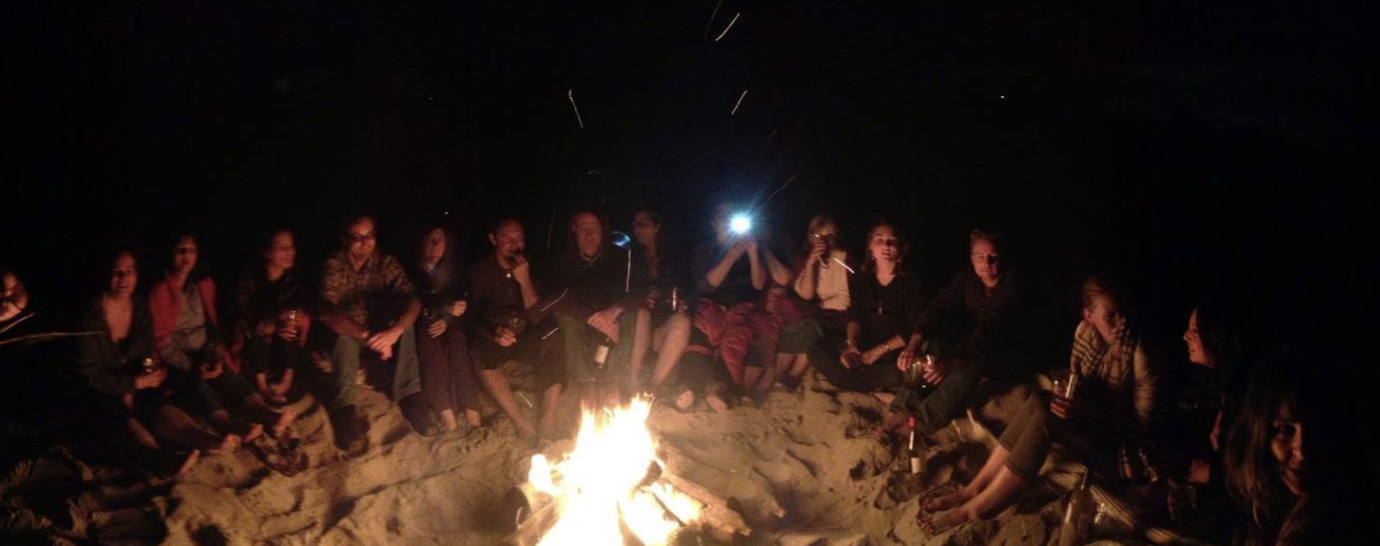
The practice of psychotherapy is in peril; patients and their practitioners are overwhelmed, while the need for quality and effective treatment has never been greater. Psychotherapy’s transformative power and influence rest upon the therapeutic relationship and the container of the therapeutic process. The profound sense of contact, containment, and mirroring provided by the original models of psychotherapy has been diluted by contemporary society’s demands and distractions. Additionally, the current dilemma has made traditional practices unfeasible for most. Communitas Psychotherapy proposes recovering this ancient practice for contemporary psychotherapy in order for it to meet the demands of modern life by supporting the psychotherapeutic endeavor. The move toward a broader frame for psychotherapy (i.e., Group Psychotherapy) isn’t entirely new, but its deeper implications warrant further exploration.
Communitas facilitated the transformation of the individual in deep coordination and participation with the whole.
Communitas is a Latin word translating roughly to “community” or “the spirit of community.” It is perhaps best known from the work of cultural anthropologist Victor Turner, who explored its critical meaning as the shared, unstructured state of liminality and transformative experience in rituals—particularly rites of passage. An ancient idea, Communitas was essential to community and an individual’s sense of self. It was a practice that created the conditions for a cohesive, functional, and generative identity to emerge, as opposed to a dissociated, collapsing, and ultimately destructive one. Turner explored Communitas as an essential aspect of cultural evolution. Often, these rites of passage served the pragmatic purpose of formal maturation from one state of selfhood to another. Most importantly, Communitas facilitated the transformation of the individual in deep coordination and participation with the whole. It was a practice, an idea, and a visionary expression of an old economy—one in deep participation with reality through connection to “otherness,” whether in humans, nature, or the more-than-human aspects of existence.
Our modern idea of capital was a profound departure from the old economy, which was circular and predicated on the primacy of reciprocal relationships with each other, Nature, and the unknown. Author Lewis Hyde explored this subject extensively in his 1979 work, The Gift: Imagination and the Erotic Life of Property. Contrasting the old circular exchanges of economies, ideas, art, and even the creative process, he elucidated how the Gift exchange was decidedly moved out of the circle and into the realm of personal ownership—capital. The Gift was the essential spark of the new that humans can only participate in and receive. This is fundamental when considering the change, cure, or transformation that is sought in psychotherapy. Communitas is of the old economy and relied entirely on the interdependence of the individual and the other. There was a shared responsibility that extended deep into the very core of the sense of self. This dependency was central and oriented the community around a primal economy of exchange that was circular in structure. Capital, understood as ownership and a setting aside something for oneself, can afford a certain amount of refinement on freedom and individual pursuit, but it cannot be the foundation of a coherent sense of self. We attempt to have it for ourselves and remove it from the circle of the greater economy, but in doing so we decrease our capacity for a substantial, abiding identity that infuses life with meaning and joy.
We take the gift and keep it for ourselves in the form of profit—and in doing so we decrease our capacity for a substantial, abiding identity that infuses life with meaning and joy
Communitas addressed a particularly pernicious modern problem of identity. Our identities are very closely connected to our problematic and stuck behavior—our symptoms. The assumption was that in order for one’s sense of self to be substantive, enduring, and deep, it must be connected to the whole, including an experience of otherness and unknowableness. This otherness and unknowableness was not only the physical community but Nature and mystery. Attachment theory continues to reveal that we cannot actually become human or know ourselves except through interaction with others. Communitas included the other both within and without us. It operated on the understanding that distinction requires interdependence with each other and the mysteries of imagination and Nature. Modernity has abstracted and dissociated from this reality; we frequently construct fantasies about who we are and what we are even capable of. This has almost certainly contributed to the explosion of identity crises. A self is not something one has, but something one becomes. However, there is so little soil for its growth today. Reciprocal relationship has been exchanged for ownership. Whenever the gifts of life–whether tangible assets, ideas, practices, services, and even a sense of self are not honored as having origins in the mystery of creation and participation with others, they become capital, and the sacred is reduced to the profane. Communitas recognized and honored that identity has its roots in the otherness of other humans and the otherness of the more-than-human world.
Building upon the fundamental container of the therapeutic relational dyad, a psychotherapy that practices with Communitas cultivates a more appropriate, present-day container capable of holding experiences so that the new can emerge and our capacity to heal, mature, and know significant psychological change can expand. A Communitas Psychotherapy is less a radical new idea and more an imaginative arrangement of well-known notes. It facilitates an emergent, deeply rooted identity capable of maturation and transformation by expanding the traditional dyadic container of the therapeutic experience. Recruiting the containing presence of others increases our capacity to contain our own otherness. As we are held, so we hold, both others and ourselves. A massive contributor to the current mental health crisis is that we continue to labor under the delusion that our identity is the sole result of our own willful assertion. We rush in to fill the void of unconsciousness or the unknown with the well-trodden paths of the ego perspective and only contaminate or prevent the process of change. Communitas Psychotherapy brings appropriate resources to hold the paradoxes and the opposites within ourselves without demanding an immediate understanding. It is a containing, not a meddling. With the ego at bay and others containing us, we are given an experiential model for holding ourselves so the new can emerge from our own inner mystery. With this realization and practice, an immense burden is potentially lifted; a critical conundrum of the modern trap is slipped.
As we are held, so we hold, both others and ourselves.
Re-imagining psychotherapy within the ancient practice of Communitas recovers a dimension of therapeutic power largely absent in the clinical model of psychotherapy. Anthropological research reminds us how ancients and primal peoples participated in the old economy, recognizing the sacred, communal, and liminal space required for transformation and the appropriate maturation needed to cohere and function in society. They instinctively knew we are a co-creation, the result of a dialogical relationship between self and the unknown—the unknown of others, ourselves, and the world. Without this, humanity risks losing individual and communal coherence and meaning. When the otherness of experience is given appropriate participation in the therapeutic process, its transformative power is reclaimed at a time when it is most needed.